Museums that Transmit Spirituality in Cusco
Discover museums in Cusco full of spirituality, wisdom, and connection with nature. Information, admission costs, opening hours, and more.
Cusco has many museums. This time we want to talk about museums full of history, where you can see artifacts full of spirituality. They are ideal spaces to understand mysticism and the energy of the universe. These places bring together art, tradition, and religion in their exhibition halls. Fortunately, the museums we will tell you about are located in the historic center itself. So it will be quite easy to visit them. In this blog, we will give you all the information, such as admission cost, halls, opening hours, and the rooms you cannot miss if you want to learn more about the spiritual force of our ancestral cultures.
Museums of Cusco
Exploring the museums of Cusco is immersing yourself in the history, art, and spirituality of one of the most emblematic cities in Latin America. From spaces dedicated to the Inca legacy to contemporary proposals, Cusco's museum offer is as diverse as it is fascinating.
What types of museums can I find in Cusco?
In Cusco you can visit history museums, pre-Columbian art, contemporary art, religious museums, thematic museums, and spaces dedicated to local crafts. Many are located in colonial mansions that are already part of the cultural heritage by themselves.
Are there craft museums in Cusco?
Yes. The Museum of Popular Art stands out, exhibiting pieces of Cusco craftsmanship such as altarpieces, textiles, and sculptures, and the ChocoMuseo, which combines artisan tradition with the history of cacao. In addition, neighborhoods like San Blas house workshops and galleries of local artists.
What religious museums can I find?
Cusco has several religious museums such as:
- Museum of Religious Art (Archbishop's Palace): houses works from the Cusco School and colonial liturgical objects.
- Cusco Cathedral Museum: with paintings, sculptures, and baroque altars.
- Santa Catalina Convent Museum and San Francisco Convent Museum: with sacred art, crypts, and colonial architecture.
Can I find modern art museums in Cusco?
Yes. The Municipal Museum of Contemporary Art (MMAC), located in Plaza Regocijo, exhibits more than 280 works by local, national, and international artists. Founded in 1995, it is a space that connects Andean tradition with 21st-century avant-garde.
The best museums to learn about the history and spirituality of the past
The museums of Cusco where you can learn more about living ancestral spirituality are possible. Below, we tell you where you can visit to learn more about Inca culture and especially part of the art, craftsmanship, and ways of life. It is also possible to learn how Machu Picchu was discovered and made known to the world. Likewise, learn much of the history and tradition that developed human life in this territory to this day.
Inka Museum
The Inka Museum is regulated and administered by UNSAAC. It is located very close to the Plaza de Armas, so the building where the pieces are exhibited was built in the 17th century. This construction was known as the House of the Admiral, where it is said to have been the house of Huáscar, during the heyday of the Tawantinsuyo.
Later, during the colony, it was occupied by the archbishopric and also became the house of the last viceroy and Government House of Marshal Santa Cruz. Unfortunately, the mansion was damaged during the 1950 earthquake. After its repair, the rooms and the museum's exhibition were rearranged.
The Inka Museum has pieces recovered from the old Cusco Library-Museum. In addition, the donation of almost the entire collection of José Lucas Caparó Muñiz. The paperwork for the operation of the museum was developed during 1920.
What do they exhibit at the Inka Museum?
The museum presents six thematic rooms that cover from the pre-Inca period to the 20th century. It includes ceramics, textiles, tools, ritual objects, architecture, Inca medicine, and ancestor worship.
What is its main room?
The Mallki Wasi room stands out for its focus on Andean worldview, funerary ceremonies, and ancestor worship.
Location
Cuesta del Almirante 103, one block from the Plaza de Armas.
Opening hours
- Monday to Friday: 08:00 to 18:00
- Saturdays and holidays: 09:00 to 16:00
Admission costs
- Foreigners: S/ 20
- Nationals: S/ 10
- Foreign students: S/ 10
Machu Picchu Museum or Casa Concha
According to historical sources, the building where this museum is exhibited belonged to the house of Tupac Yupanqui, Inca successor of Pachacútec. It is located a few meters from the Plaza de Armas. This is why only the building is considered a UNESCO World Heritage Site.
After Spanish rule, this territorial sector fell under the domain of Diego de Santiago and also passed to General Pedro Alonzo Hinojosa. After other owners, it came into the hands of Manuel Placido Berriozábal in 1710. The year the construction we can see today began.
Before being handed over to the National University of San Antonio Abad of Cusco, it was a police station for quite some time. Being a direct property of the State. Until during the government of President Valentín Paniagua (2001), it was handed over to the university's domains.
In 2011, a large number of pieces taken by Hiram Bingham to Yale University were recovered. This process was carried out by the President of Peru Alan García. Since then, visits and the value of the museum have increased considerably.
What do they exhibit at the Machu Picchu Museum?
It exhibits more than 360 archaeological pieces returned by Yale, including ceramics, lithic, metallic objects, and bone remains. The collections are divided into three: Hiram Bingham, UNSAAC, and Casa Concha.
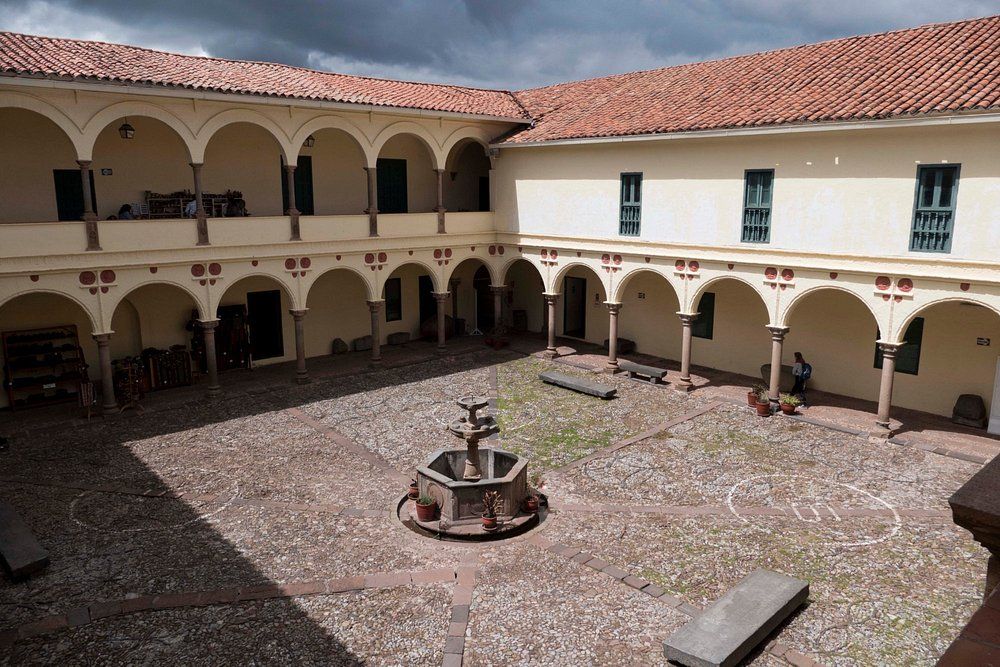
The same building that houses the rooms is another attraction. This is because it has colonial architecture and the presence of intercolumns with baroque carvings. In addition, inside you can see three arches, also with beautiful details.
What is its main room?
The Hiram Bingham collection is the most prominent, with original objects from Machu Picchu and audiovisual material about the excavations.
Location
Calle Santa Catalina Ancha 320, near the Plaza de Armas.
Opening hours
- Monday to Saturday: 09:00 to 17:00
- Sunday: closed
Admission costs
- Foreigners: S/ 20
- Nationals: S/ 10
- Foreign students: S/ 10
- National students: S/ 5
- Cusco residents: free admission
Regional Historical Museum or Casa Garcilaso de la Vega
This museum is also very close to Cusco's Plaza de Armas. Precisely in one of the corners of the adjacent square, called Plaza Regocijo. Although it is a pre-Columbian museum, it is named Casa Garcilaso because it was the home and place where the mestizo chronicler Inca Garcilaso de la Vega grew up.
The house belonged to the father of our emblematic character since 1560. There, together with his mother Isabel Chimpu Ocllo, he began to see and learn more about the history of both ancestors. It is currently a Pre-Columbian museum, where you can learn about the events that marked humanity in this territorial sector that encompasses Cusco and the Sacred Valley.
What do they exhibit at Casa Garcilaso de la Vega?
The Casa Garcilaso Regional Historical Museum exhibits 13 rooms with pieces from the Pleistocene to the viceregal era. It includes ceramics, ritual objects, colonial art, and works from the Cusco School.
You can also find a room dedicated to one of the heroes of Peruvian independence, Tupac Amaru II. The room shows how the rebellion of 1780 began, as well as the end and the terrible retaliation to which he was subjected along with his family and all his lineage.
Similarly, you can find a room dedicated to Garcilaso de la Vega, as a sample of the syncretism and mestizaje that occurred after the arrival of the Spaniards. In the room, you can see the figures of his parents and the chronicler.
What is its main room?
The room dedicated to Inca Garcilaso de la Vega stands out, with personal objects, documents, and representations of his mestizo legacy.
Location
Casa Garcilaso, in the historic center of Cusco. At Calle Heladeros 165, Cusco.
Opening hours
Monday to Sunday: 08:00 to 17:00
Admission costs
- Free admission on the first Sunday of each month for Peruvians with ID.
- General admission included in the Cusco Tourist Ticket.
Pre-Columbian Art Museum of Cusco
The Pre-Columbian Art Museum (MAP Cusco) is located in the historic Casa Cabrera, a 17th-century colonial mansion located in the Plazoleta de las Nazarenas, a few steps from Cusco's Plaza de Armas. This building was originally the "Amaru Cata" or House of Knowledge, an Inca school, and later transformed into a monastery by the Spanish conquerors. In 1649, it passed into the hands of Luis Jerónimo de Cabrera, whose coat of arms still adorns the facade.
In 1981, the property was acquired by Banco Continental and restored by the BBVA Foundation, which in alliance with the Larco Museum of Lima, inaugurated the museum in 2003. Since then, MAP Cusco has become the first Peruvian museum dedicated exclusively to pre-Columbian art, with modern museography that highlights the cultural richness of ancient Peru's civilizations.
What do they exhibit at the Pre-Columbian Art Museum?
The museum houses more than 450 archaeological pieces ranging from 1250 BC to 1532 AD, from various cultures such as Nasca, Mochica, Huari, Chimú, and Inca. The collections include:
- Finely decorated ceramics.
- Gold and silver metalwork.
- Textiles with complex designs.
- Wood sculptures and ritual objects made from seashells and stone.
All pieces come from the prestigious Larco Museum of Lima, and are organized in 11 thematic rooms that allow a chronological and symbolic tour of ancient Peru's art.
What is its main room?
Among the most outstanding rooms are:
- Gold Room: Represents the connection between the spiritual and earthly worlds.
- Silver Room: Symbolizes the feminine in nature.
- The Incas Room: Dedicated to the imperial expansion of the Tahuantinsuyo.
- The South and The North Room: Exhibit pieces from the Nasca, Paracas, and Mochica cultures.
- Before the Incas Room: Shows objects from the Chimú and Chancay states.
Each room is designed to highlight the symbolism of the materials and the worldview of the represented cultures.
Location
Plazoleta de las Nazarenas 231, Cusco, a few meters from the Plaza de Armas.
Opening hours
- Monday to Sunday: 08:00 to 22:00
- Last entry: 21:30
- Cusco residents: free admission from 09:00 to 16:00
Admission costs
- Foreigners: S/ 20
- Nationals: S/ 10
- Foreign students: S/ 10
- National students: S/ 5
- Cusco residents: free admission (09:00 to 16:00)
Other options for mystical tourism in Cusco
Mystical tourism in Cusco offers unique spiritual experiences:
- Ancestral ceremonies such as offerings to Pachamama, rituals with Ayahuasca and Wachuma.
- Meditation and yoga retreats in the Sacred Valley.
- Sacred walks such as the Inca Trail, Ausangate Trek, and Humantay Lake.
- Spiritual festivities such as Inti Raymi, Qoyllur Rit'i, and Corpus Christi.
- Energy places such as Ñaupa Iglesia, Sacsayhuamán, Quillarumiyoc, and the Temple of the Moon.
Frequently asked questions
1. What are the most recommended museums to learn about Inca history in Cusco?
The most outstanding are the Inka Museum, the Machu Picchu Museum - Casa Concha, and the Pre-Columbian Museum, for their archaeological collections and focus on Andean worldview.
2. Where is the Inka Museum located and what can I see there?
It is located on Cuesta del Almirante, near the Plaza de Armas. It exhibits pre-Inca, Inca, and colonial objects, including textiles, ceramics, and mummies.
3. What are the hours and prices of the main museums in Cusco?
Hours vary between 08:00 and 18:00. Prices range from S/ 10 to S/ 20 for foreigners, and between S/ 5 and S/ 10 for nationals. Some museums offer free admission to Cusco residents or students.
4. Are there modern art museums in Cusco?
Yes, the Municipal Museum of Contemporary Art offers works by local and national artists, with a collection exceeding 280 pieces.
5. What religious museums can I visit in Cusco?
You can visit the Museum of Religious Art, the Cathedral Museum, the Santa Catalina Convent, and the San Francisco Convent, all with sacred art and colonial architecture.
6. Are there craft museums in Cusco?
Yes, like the Museum of Popular Art and the ChocoMuseo, which show the artisanal richness of the region, including textiles, altarpieces, and cacao products.
7. What is the Machu Picchu Museum - Casa Concha and what does it exhibit?
It is a museum that houses archaeological pieces returned by Yale, including ceramics, tools, and bone remains from Machu Picchu. It also offers audiovisual material about the excavations.
8. What can I see at the Pre-Columbian Museum or Casa Garcilaso?
This museum presents pieces from the Pleistocene to the viceregal era, including ceramics, colonial art, and personal objects of Inca Garcilaso de la Vega.
9. What options are there for mystical tourism in Cusco?
You can participate in rituals such as offerings to Pachamama, sacred walks, spiritual retreats, and visit energy places like Sacsayhuamán and Quillarumiyoc.
10. What museums are included in the Cusco Tourist Ticket?
The Casa Garcilaso Regional Historical Museum, the Museum of Contemporary Art, and other cultural spaces are included in the Tourist Ticket, which allows you to visit several sites with a single ticket.