The San Pedro Market in Cusco – history and cultural heritage
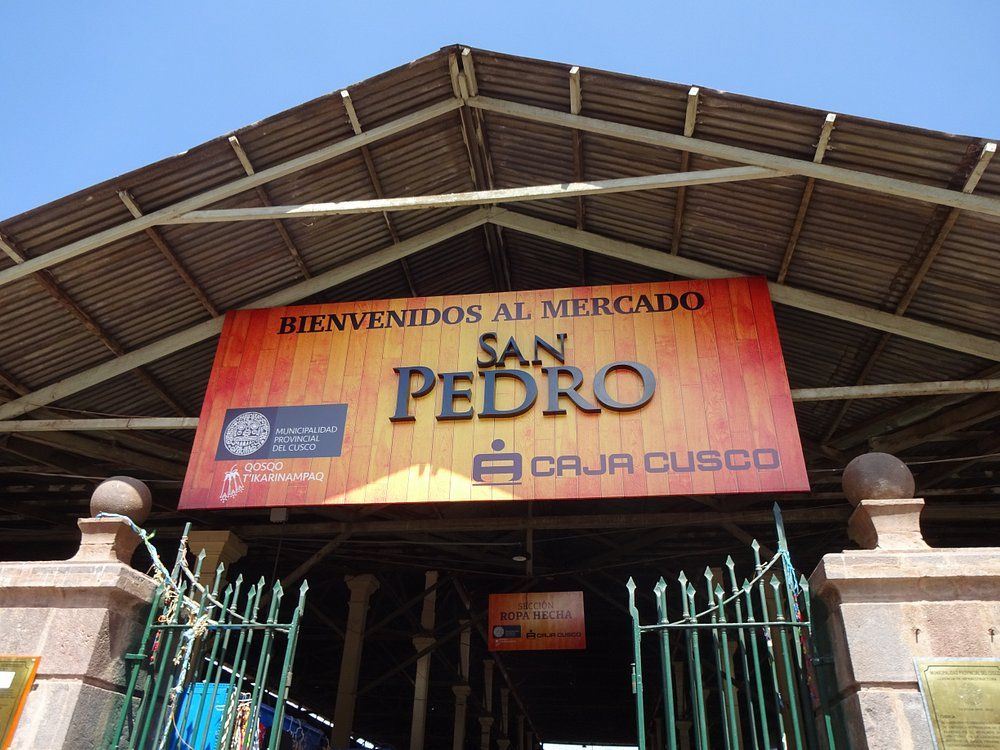
The San Pedro Market in Cusco was built in 1925. It is said that the architect in charge of this project was Gustave Eiffel, at the initiative of the mayor Manuel Silvestre Frisancho.
The San Pedro Market in Cusco was built in 1925. It is said that the architect in charge of this project was Gustave Eiffel, at the initiative of Mayor Manuel Silvestre Frisancho. This market was one of the projects for Cusco to recover its splendor of the past. At that time, it was being relegated from among the most important cities in Peru. The arrival of the railroad and trains allowed the Cusco economy to reactivate since the beginning of Peru as an independent republic. Today it is a tourist attraction for the thousands of tourists who arrive in Cusco.
San Pedro Market in Cusco
The San Pedro Market in Cusco is the first market built in the city of Cusco. In 2025, it will celebrate 100 years of normal operation. Although it looks a bit worn, it has functional and adequate facilities for serving the general public.
It has a neoclassical architectural style and the area in which it was built has been growing more and more. In total, it has an area of 7,000 square meters. It is recorded to have 1,180 stalls. However, in the surroundings and neighboring streets, there are several street vendors.
Currently, San Pedro Market is a sample of tradition and part of Cusco and Peruvian culture. Some of its stands or shops still offer products from the past. Likewise, artisanal products, ancestral medicine, and as in every good Peruvian market, a sample of the best of local and national gastronomy are offered.
Location and accessibility
San Pedro Market is located between Cascaparo and Santa Clara streets. It is in the heart of Cusco's historic center.
How to get to the market from Plaza de Armas?
- It is very close to Plaza de Armas, so you can get there on foot. The walking time is less than 10 minutes.
- To get there, just follow Mantas street, then continue straight along Marques street, to enter through Santa Clara street.
- Just a few steps away, you will find a small plaza where national craft fairs, book fairs, and other events sometimes arrive. Right there, on the left hand, is San Pedro Market.
Can I get there from the train station?
- Yes, you can get there from both stations. Although to get there from Wanchaq station, it is recommended to take a taxi. The cost can vary between 6 to 10 soles.
- From the San Pedro train station, you practically just have to cross the street that separates them. Remember that this station is also located on Cascaparo street.
What are the opening hours of San Pedro Market in Cusco?
- San Pedro Market is open every day of the week.
- It opens its doors from 6:30 AM.
- It closes its doors at 6:00 PM.
History of San Pedro Market
- The space where San Pedro Market is built was part of the Inca Trails. From the sacred huaca of Huacaypata, the route to Contisuyo departed.
- During the early years of Spanish rule, several Inca houses in the area were evicted for the construction of the General Hospital of Natives (1556).
- Later, this Hospital became the Parish of San Pedro.
- Near the end of Spanish rule and before independence, this place already had the name of San Pedro neighborhood.
- Many of the inhabitants took advantage of the wide area to begin trading or receiving merchandise before taking products to Plaza de Armas and Plaza San Francisco. Places where commerce was practiced in Cusco.
- In 1842, with an independent Peru, Cusco began a fairly aggressive economic decline. So any progress was paralyzed until the 20th century.
- During the beginning of the 20th century, some reforms began, from the arrival of the railroad and the intention to create a market.
- It is for this reason that, during the first decade, the commerce that was done in Plaza de Armas was moved to the San Pedro neighborhood.
- In 1925, at the initiative of the mayor of Cusco, Manuel Silvestre Frisancho, he obtained the services of Gustave Eiffel.
- It was Gustave Eiffel who designed much of the structures that today provide a roof for the market.
- In 1955, after the earthquake (which occurred in 1950) damaged some of the facilities, it was decided to make an expansion.
- Since then, San Pedro Market has been one of the main commercial centers in Cusco. It also became a tourist attraction.
Is it easy to get to San Pedro Market?
Of course, it is located in the historic center. Many tourists stay in hotels that allow them to walk around without much problem. In addition, all taxi drivers can get to this place. However, they may have a tedious trip due to city traffic.
What is there in San Pedro Market?
Handicrafts
The market has a wide variety of handmade crafts, such as alpaca textiles, Cusco ceramics, leather bags, bracelets, ponchos, and chullos. They are ideal for taking unique souvenirs from your visit to Cusco.
Meats
In the meat section, you will find fresh products such as beef, pork, chicken, and fish. It is a section very frequented by locals and a curious stop for the bravest visitors.
Fruits
The fruit stalls offer an explosion of colors and flavors. In addition to the most popular fruits, here you can find exotic fruits like chirimoya, aguaymanto or uchuva, lucuma, and more. There are also dried fruits and Andean seeds like sacha-inchi and kiwicha.
Beverages
One of the main attractions are the natural juices. There are more than 30 stalls that prepare energizing combinations with fresh fruits, honey, and pollen. You can also try the traditional coca tea, ideal for combating altitude sickness.
Restaurants
The market offers typical dishes such as chicken broth, chiri uchu, fried trout, ceviche, papas a la huancaína, and Cusco-style adobo. Prices are affordable and the food is homemade and abundant.
Souvenirs
In addition to handicrafts, you can purchase souvenirs such as caps, scarves, wallets, magnets, decorative mugs, and other items that reflect Andean culture.
Natural medicine products
The market is a center of ancestral knowledge. You will find medicinal herbs, coca leaves, dried toads, Amazonian tinctures, and ointments made with animal fat. The "mamitas" offer advice on spiritual cleansings and natural remedies.
Musical instruments
You can also find traditional Andean musical instruments such as quenas, zampoñas, charangos, and drums. They are perfect for folk music lovers.
What can I find near the market?
San Pedro Market is not only a key point to experience the living culture of Cusco but is also surrounded by historical and tourist places that enrich your visit even more. Just a few steps from the market, you can discover architectural, religious, and cultural gems that are part of the heart of the imperial city.
San Pedro Train Station
Located right in front of the market, this station is one of the main departure points to Machu Picchu. From here, PeruRail trains and other companies depart to Ollantaytambo and Aguas Calientes. Its architecture retains a colonial style and is an ideal place to take photographs or plan your next adventure.
The Arch of Triumph of Santa Clara
Just a few meters from the market, this imposing stone arch was built in the 19th century to commemorate the independence of Peru. It is one of the most representative monuments of the city and marks the entrance to the San Pedro neighborhood. Its neoclassical design and history make it a must-stop for architecture and history lovers.
San Pedro Temple
This colonial temple, located in front of San Pedro Plaza, is a jewel of Andean baroque. Built in the 17th century, it stands out for its stone facade and its interior decorated with golden altarpieces and Cusco paintings. It is a place of spiritual retreat and also a testimony of religious syncretism in Peru.
What is the experience of visiting San Pedro Market like?
- The market offers an impressive variety of products that you will hardly find elsewhere. From exotic fruits like chirimoya and aguaymanto to medicinal herbs, alpaca textiles, and typical sweets like cocadas and kiwicha.
- The market is also a showcase of the unusual: dried toads used in traditional medicine, coca leaves, variety of medicinal herbs, animal skulls, sometimes llama fetuses, and other ritual objects that are part of the Andean worldview. Each stall is an opportunity to learn something new and surprising.
- One of the deepest aspects of the experience is that you can meet people who continue to keep ancestral practices alive. In the traditional medicine or herbs section, they also offer herbs for spiritual cleansings, teas for altitude sickness, and advice on Andean rituals. Here, ancestral spirituality is not a tourist attraction but a living practice.
- The food area is a feast for the palate. You can enjoy chicken broths, tamales, potatoes with cheese, Cusco-style adobo, and freshly prepared natural juices. All at affordable prices and with the homemade flavor that characterizes Peruvian cuisine.
- In addition to fresh food, the market offers natural products such as honey, pollen, essential oils, infusions, and ointments made with Andean ingredients. They are ideal for those looking for healthy and sustainable alternatives.
- Take home authentic souvenirs that reflect the art and cultural identity of Cusco. Textiles, bags, ponchos, bracelets, magnets, and other handmade souvenirs. There are few markets in the world like Cusco's. It is an experience that few dare to live.
San Pedro Market: Expression of culture and tradition
The San Pedro Market in Cusco is not just a commercial center but a true symbol of living culture and the ancestral tradition of the Cusco people. With almost 100 years of history, this space has witnessed the evolution of the city and has kept its popular essence intact. From its origins on ancient Inca trails to its design by Gustave Eiffel, the market represents a unique fusion of history, architecture, and daily life.
Every corner of the market—from the handicraft and natural medicine stalls to the restaurants that offer typical dishes—reflects the soul of Cusco. The experience of walking through its aisles is an immersion in the flavors, colors, sounds, and beliefs of the Andes. In addition, its privileged location in the historic center and its proximity to monuments such as the Arch of Santa Clara and San Pedro Temple make it a meeting point between the past and the present.
Visiting San Pedro Market is much more than shopping: it is living Andean culture, connecting with its spiritual roots, and taking with you authentic memories of a city that breathes history and tradition.
Frequently asked questions
What is the origin of San Pedro Market?
San Pedro Market was inaugurated in 1925 at the initiative of the then mayor of Cusco, Manuel Silvestre Frisancho. Its construction marked the beginning of a formal space for commerce in the city, replacing the commercial activities that were previously carried out in Plaza de Armas.
Who designed the structure of the market?
The structural design of the market was entrusted to engineer Gustave Eiffel, famous for the Eiffel Tower in Paris. He contributed metallic elements that are still part of the market's roof, giving it a distinctive neoclassical style.
What was in the place before the market was built?
Before becoming a market, the place was part of the Inca Trails and later housed the General Hospital of Natives (1556), which later became the Parish of San Pedro. Over time, the area consolidated as a commercial neighborhood.
Why is the market considered part of Cusco's living culture?
Because in its aisles, ancestral traditions are kept alive, both in the products sold and in spiritual, gastronomic, and artisanal practices. It is a space where the history, identity, and daily life of Cusco intertwine.
How has the market evolved over time?
Since its founding, the market has grown in size and number of stalls. In 1955, after the 1950 earthquake, important expansions were made. Today it has more than 1,180 stalls and an area of 7,000 m², being one of the largest and most visited markets in Peru.
What types of traditional products are still sold?
You can find Andean handicrafts, natural medicine products, typical foods, musical instruments, and objects used in spiritual rituals. Many of these products have been sold in the market since its beginnings.
What importance does the market have for Cusco residents?
San Pedro Market is not only a supply center but also a symbol of cultural identity. It is a place where Cusco residents connect with their roots, share ancestral knowledge, and keep their customs alive.
What historical events marked the development of the market?
One of the most important events was the 1950 earthquake, which damaged part of the structure. This led to an expansion in 1955, consolidating the market as a larger and more functional space for merchants and visitors.
What is the relationship between the market and the San Pedro neighborhood?
The market is located in the San Pedro neighborhood, an area that was already recognized as a commercial center since colonial times. Its strategic location facilitated the transfer of commerce from Plaza de Armas to this new space.
Why is San Pedro Market considered a tourist attraction?
In addition to its historical and architectural value, the market offers an authentic experience of living culture, where visitors can interact with local merchants, try typical dishes, purchase artisanal products, and learn about Andean spiritual practices.